
Tax-Minimization Strategies
Our team will help you grow, access and protect your retirement income in the most tax-advantaged methods possible.
Tax-Minimization Planning
At Gameplan Financial, we recognize that tax strategy plays a critical role in building, protecting, and sustaining wealth for individuals, business owners, and families. Effective tax-minimization is not about avoiding taxes, but about making informed, strategic decisions that help reduce unnecessary tax exposure and improve long-term, after-tax outcomes.
Tax-minimization strategies involve using the right combination of planning tools and financial structures to improve tax efficiency. From tax-deferred and tax-advantaged accounts to tax-free growth opportunities, there are multiple ways to help limit tax drag and preserve more of what you earn.
A successful tax strategy also requires understanding how everyday financial decisions impact taxation. Managing capital gains, coordinating deductions and credits, and timing income or distributions properly can significantly influence overall results. When these elements are aligned within a broader financial game plan, the benefits compound over time.
Beyond today’s tax considerations, smart tax planning focuses on the future. Creating tax-efficient income streams and leveraging strategies designed for tax-free growth and distribution can help protect retirement income and strengthen the legacy you intend to leave behind.
At Gameplan Financial, we design personalized tax-minimization strategies built around your goals, your timeline, and your financial complexity. Our role is to help you navigate tax challenges with clarity and confidence, so your financial game plan supports growth, protection, and lasting impact for generations to come.
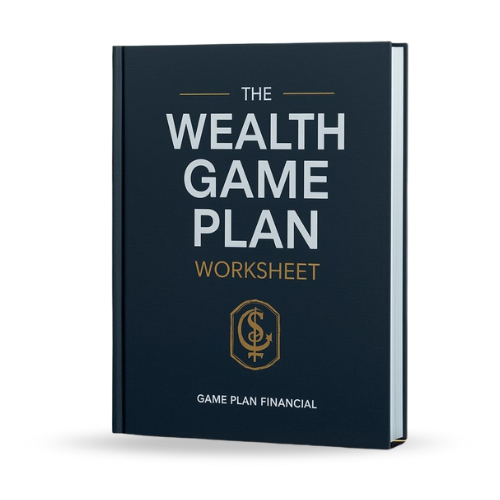
"The Wealth Gameplan"
GET YOUR COMPLIMENTARY DIGITAL COPY OF
Gameplan will show you how a fine-tuned team of professionals can give you the clarity to safeguard and control your assets now and into the future.
Tax-Minimization Solutions:
AbouT Retirement INCOME Planning
Tax-Free Retirement Income Solutions
Creating Guaranteed Income for Life
Annuity Maximization
Key Questions to Ask Yourself about Taxes in Retirement
-
Are you familiar with alternative retirement saving options beyond traditional plans like a 401(k), IRA, or deferred compensation plan?
If not, you should explore various retirement saving avenues beyond conventional plans like a 401(k), IRA, or deferred compensation plan to diversify your portfolio and maximize tax advantages.
-
Have you allocated at least 25% of your retirement funds into tax-free accounts?
If not, you should consider reevaluating your retirement portfolio to ensure at least 25% of your funds are invested in tax-free accounts for enhanced tax efficiency and flexibility.
-
Have I optimized my investment portfolio for tax efficiency?
If you're not taking full advantage of available tax deductions and credits, you should review your financial situation to identify potential opportunities for reducing taxable income and lowering your overall tax bill.
-
Have I explored tax-deferred or tax-free investment options?
If your investment portfolio isn't structured for tax efficiency, you should assess your holdings and consider repositioning assets into tax-advantaged accounts or investments with favorable tax treatment to minimize tax liabilities and enhance after-tax returns.
-
Is my estate plan designed to minimize potential estate taxes?
If your estate plan doesn't include strategies for minimizing potential estate taxes, you should consult with an estate planning professional to explore various techniques, such as gifting, charitable giving, or trusts, to mitigate tax liabilities and preserve more of your wealth for future generations.
-
Do you possess penalty-free avenues to access retirement funds prior to reaching age 59 1/2?
If not, you should explore penalty-free options for accessing retirement funds before reaching age 59 1/2 to accommodate unforeseen financial needs or early retirement plans without incurring penalties.